


Download the article in pdf format
Publication date: 01.09.2021
DOI: 10.51871/2588-0500_2021_05_03_24
UDC 796
FORMING MOTIVATION FOR INDEPENDENT MOTOR ACTIVITY CLASSES IN STUDENTS OF THE NON-MAJOR HIGHER EDUCATION ESTABLISHMENT
Yu.S. Sergeeva (Zhuravlyova)1, G.I. Zhuravlyov1, E.A.Lubyshev 1,2
1Peoples' Friendship University of Russia, Moscow, Russia
2Plekhanov Russian University of Economics, Moscow, Russia
Key words: motivation processes, physical culture, independent motor activity, full-time department students, healthy lifestyle, structure of the motivation- and value-based attitude towards physical culture.
Annotation. This article is dedicated to processes of forming students’ motivation for motor activity in their free time. Motor activity, alongside with healthy eating and self-regulation skills, is one of the most important components of a healthy lifestyle. Insufficiently formed motivation in students for independent motor activity leads to decreased physical loads, and, as a result, to a decreased level of functional indicators of the organism. We conducted this study to assess processes of forming motivation for independent motor activity by inviting first-year and second-year students of the Medical Institute in the Peoples' Friendship University of Russia (PFUR) located in Moscow.
Introduction. Today the issue of meaningful and motivated motor activity for youth is of great relevance. Reasons for that can be analyzed scientifically, and it can be concluded, that this issue, unfortunately, is yesterday’s news. The particularity of forming, establishing and accepting values of a healthy lifestyle both for an individual and for the society in whole is that it cannot be obtained, imported or forced upon. Based on its definition, the only way to have a healthy lifestyle is to pursue it. In order for it to be healthy, it is implied that the society or a subject cultivate it for a long period of time [1]. It is important to have a clear understanding of healthy lifestyle basics, capability and desire to engage in independent motor activity. Most importantly, it is relevant to youth, students in particular.
The purpose of this study was to determine a level of the motivation- and value-based attitude towards physical culture in whole and independent motor activity in particular. Ninety-eight (98) full-time department students of the Medical Institute in the Peoples' Friendship University of Russia (PFUR) participated in the study.
While trying to set up the logic of our research, we formed following research tasks:
- To differentiate students and divide them into two groups based on signs of engagement in independent motor activity;
- To analyze the structure of motives to engage in independent physical culture classes;
- To identify negative factors of the process of forming students’ motivation to various motor activities, which, in the end, lead to formalization of such activities.
Methods and organization. In order to identify the level of motivation- and value-based attitude towards independent motor activity we used the questionnaire method for first-year and second-year students of the Peoples' Friendship University of Russia’s full-time department. While interpreting questionnaire results, we used mathematical statistics methods.
Physical culture nowadays is important for a modern student, since most of the time is spent in inactive state. Such lifestyle often leads to various diseases of the cardiovascular disease, musculoskeletal system, to gaining excessive weight etc., and these are not all health disorders caused by hypodynamia. That is why one of relevant issues is engaging students in forming a healthy lifestyle and independent physical culture and sports classes. One of key factors of engaging in independent physical activity is motivation [1, 2].
Students of the PFUR Medical Institute’s full-time department go to lectures, where they sit most of the time. Heavy learning loads and a sedentary lifestyle affects their health level greatly. Students also visit physical culture classes to a degree, when they are not able to form a habit for independent motor activity and to comprehend theoretical issues related to a necessity to live by basic principles of a healthy lifestyle. Visiting physical culture classes does not give a chance for students of the Medical institute to fully form a habit for working out independently and comprehend theoretical questions related to a necessity to follow basic principles of a healthy lifestyle. The questionnaire showed us that not all students are not involved in the independent training process. There are many of students, who actively lead a normal, healthy lifestyle and work out in free time.
The maturity of the high level of motivation is an important factor in any classes, including physical culture and sports. It is the main driving factor in improving motor skills and abilities of students in physical culture and sports, in supporting the functional fitness of all organs and organism’s systems [3, 4].
Results and discussion. Analysis of answers to the question whether students engage in independent physical culture showed that most of the interviewed (51,8%) work out in free time, 48,2% of students do not work out additionally. Processing of the next question’s answers showed reasons why some students do not want to work out additionally: 63% of students do not want to spend their free time working out, 19,5% said that loads from educational classes are enough (Fig. 1).
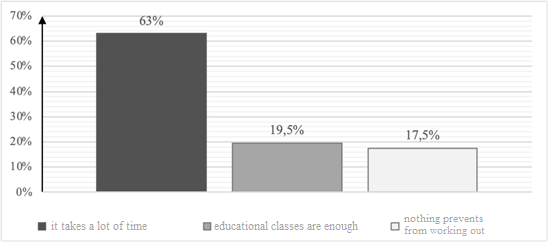
Fig. 1. “What prevents you from working out independently?”
When discovering the motive for independent classes, it was revealed that most students (51,8%), who work out in their free time, want to keep themselves in good shape (52,5%), 30,2% of them want to preserve their health, 17,3% of the interviewed do this because they show solidarity with their friends (their friends also work out) (Fig. 2).
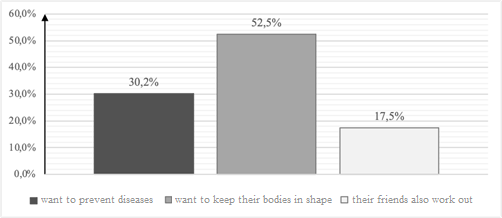
Fig. 2. “Research of motives for independent workout”
The answers also show that the most preferred types of training are strength training (48,6%), cardio training (17,7%) and aerobics (33,7%).
It indicates that most of students choose types of training related to increased physical loads, which contribute not only to the health improvement, but also to the fulfillment of their motives. Students assume that stretching and cardio training also have a positive impact on their emotional state, which is important during the process of educational activity.
Based on answers of all interviewed students, reasons for a lack of will to work out independently were identified. It was revealed that 31,8% of students get tired due to heavy loads, and they do not have time to work out in their free time, 25% of students are not motivated enough to work out independently (Fig. 3).
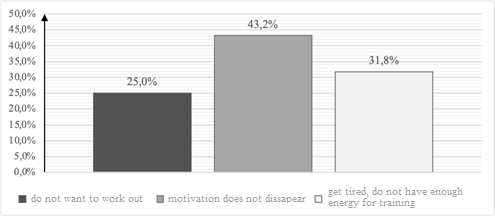
Fig. 3. “Reasons for a lack of motivation for working out independently”
Conclusion. According to results of this study, we can conclude that most of the interviewed students have motives for working out and understand how it is important for them in the first place. However, there are also students, who are not comfortable with working out due to tiredness and a waste of time, which is why main physical culture classes are enough, but they take 4 hours a week in average, which is insufficient for a full support of the organism in its active state [5].
The modern world offers comfortable life conditions, but a great amount of stress and sedentary lifestyle lead to conditions, in which people need certain physical loads [6]. When doing the daily routine, we often forget about them and underestimate their role in our life. That is why it is so important to motivate students to work out independently.
References
- Baranovskaya D.I. The role of physical culture classes in forming motivation in students / D.I. Baranovskaya, V.I. Vrublevskaya // Relevant issues of health-improving physical culture and sports for all within the competitive stage: Abstracts of the VIII International Scientific Session on Scientific project results for 2004. Minsk: BGUFK. – 2005. – P. 13-16.
- Lubyshev E.A. Main trends in forming the system of values in youth within the healthy life style area / E.A. Lubyshev, G.S. Lubysheva // From the collection: Modern problems in science. Abstracts of the VII International Scientific and Practical Conference. – 2020. – P. 383-390.
- Lubyshev E.A. Main reasons for students’ demotivation on physical culture classes / E.A. Lubyshev // From the collection: Innovations in education. Abstracts of III Scientific and Practical Conference. – 2015. – S. 125-129.
- Zhuravlyova Yu.S. Optimizing the studying process for the discipline “Physical culture” in the Peoples' Friendship University of Russia based on using modern types of motor activity / Yu.S. Zhuravlyova, A.V. Kozlov, A.A. Budarnikov, S.S. Kubenin // World of Science. – 2017. – Vol. 5. – № 3 – P. 9.
- Zhuravlyova Yu.S. Health-improving aerobics within the studying process in the Higher Education Establishments / Yu.S. Zhuravlyova // Moscow. – 2014.
- Syrvacheva I.S. Motivation for independent work-outs with physical exercises / I.S. Syrvacheva // Physical culture, health: issues, prospects, technologies: abstracts of the scientific conference of the FESU. M.: Vladivostok. – 2003. – 65 p.
Spisok literatury
- Baranovskaya D.I. Rol' fizkul'turnykh zanyatij v formirovanii motivatsii k zanyatiyam fizicheskoĭ kul'turoĭ studencheskoj molodezhi / D.I. Baranovskaya, V.I. Vrublevskaya // Aktual'nye problemy ozdorovitel'noij fizicheskoij kul'tury i sporta dlya vsekh na sovremennom etape: materialy VIII Mezhdunar. nauch. sessii po itogam NIR za 2004 g. Minsk: BGUFK. – 2005. – S. 13-16.
- Lubyshev E.A. Osnovnye trendy v formirovanii tsennostnykh orientatsij u molodezhi v sfere zdorovogo obraza zhizni / E.A. Lubyshev, G.S. Lubysheva // V sbornike: Modern problems in science. Abstracts of VII International Scientific and Practical Conference. – 2020. – S. 383-390.
- Lubyshev E.A. Osnovnye prichiny demotivatsii obuchayushchikhsya na zanyatiyakh fizicheskoj kul'turoj / E.A. Lubyshev // V sbornike: Innovatika v obrazovanii. Sbornik statej po materialam III nauchno-prakticheskoj konferentsii. – 2015. – S. 125-129.
- Zhuravlyova Yu.S. Optimizatsiya uchebnogo protsessa po distsipline «Fizicheskaya kul'tura» v rossijskom universitete druzhby narodov na osnove primeneniya sovremennykh vidov dvigatel'noj aktivnosti / Yu.S. Zhuravlyova, A.V. Kozlov, A.A. Budarnikov, S.S. Kubenin // Mir nauki. – 2017. – T. 5. – № 3 – S. 9.
- Zhuravlyova Yu.S. Ozdorovitel'naya aerobika v uchebnom protsesse VUZa / Yu.S. Zhuravlyova // Moskva. – 2014.
- Syrvachyova I.S. Motivatsiya samostoyatel'nykh zanyatij fizicheskimi uprazhneniyami / I.S. Syrvacheva // Fizicheskaya kul'tura, zdorov'e: problemy, perspektivy, tekhnologii: materialy nauch. konf. DVGU. M.: Vladivostok. – 2003. – 65 s.
Information about the authors: Yulia Sergeevna Sergeeva (Zhuravlyova) – Candidate of Biological Sciences, Associate Professor of the Department of Physical Education and Sports of the Peoples' Friendship University of Russia (PFUR), Moscow, e-mail: This email address is being protected from spambots. You need JavaScript enabled to view it.; Georgij Ivanovich Zhuravlyov – Student of the Faculty of Physics, Mathematical and Natural Sciences of the PFUR, the Department of Fundamental Informatics and Informational Technologies, Moscow; Evgenij Aleksandrovich Lubyshev – Candidate of Pedagogical Sciences, Associate Professor of the Department of Physical Education of the Plekhanov Russian University of Economics, Moscow, e-mail: This email address is being protected from spambots. You need JavaScript enabled to view it..